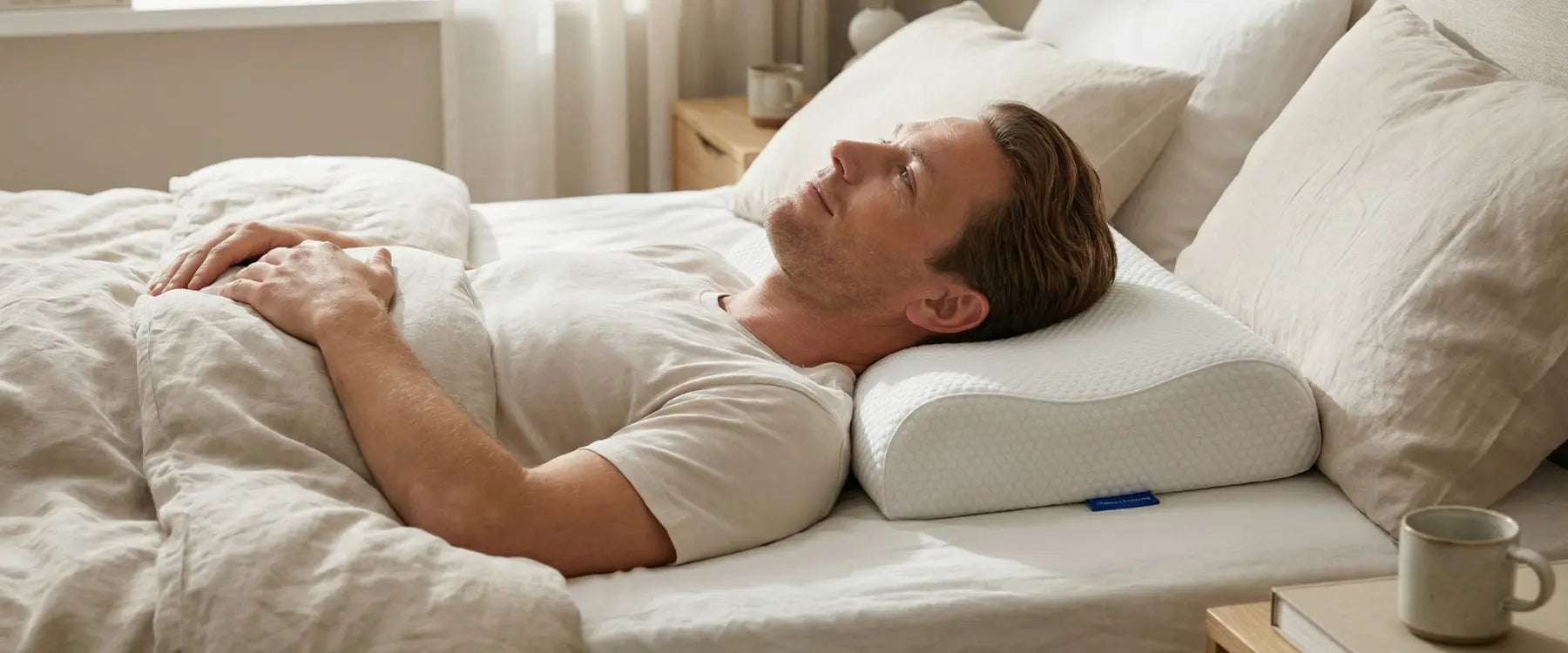
Most people replace their mattress eventually.
Their sheets get washed regularly.
But pillows? They often stay on the bed far longer than they should.
If your pillow has been with you for years, it may no longer be supporting your sleep; even if it still feels “fine.” In this Sleep Journal entry, we’ll explore how often you should replace your pillow, the clear signs it’s time for a new one, and why this small change can make a big difference in how you sleep.
Why Pillows Wear Out (Even If They Look Okay)
A pillow supports your head and neck for thousands of hours each year. Over time, materials naturally break down.
As a pillow ages:
-
Support weakens
-
Shape becomes uneven
-
Materials compress and stop rebounding
-
Alignment becomes inconsistent
This gradual change is easy to miss, but your body often feels it before you notice it visually.
How Often Should You Replace Your Pillow?
There’s no exact date, but a good general guideline is:
-
Every 1–2 years for most pillows
-
Sooner if the pillow no longer holds its shape
-
Sooner if your sleep needs or posture have changed
If you’ve recently noticed neck stiffness, headaches, or lighter sleep, your pillow’s age may be part of the reason.
7 Clear Signs It’s Time to Replace Your Pillow
1. Your Pillow No Longer Holds Its Shape
If it stays flat or lumpy after fluffing, it’s no longer providing consistent support.
2. You Wake Up With Neck or Shoulder Stiffness
As discussed in our Sleep Journal article on neck pain and poor sleep, worn pillows often fail to support proper overnight alignment.
3. You’re Constantly Adjusting It at Night
Frequent repositioning is a sign your pillow isn’t supporting you naturally.
4. Your Pillow Feels Different Than It Used To
Support loss happens gradually. If it feels “off,” trust that signal.
5. You Sleep Better Away From Home
Hotel or guest bed sleep feeling better often points to different pillow height or support—not magic.
6. Your Sleep Position Has Changed
What worked years ago may not suit how you sleep now.
7. It’s Simply Been Too Long
If you can’t remember when you bought it, that’s usually your answer.
Why Old Pillows Can Affect Sleep Quality
Even if discomfort is mild, worn pillows can cause:
-
Subtle neck strain
-
Micro-awakenings
-
Reduced deep sleep
-
Morning fatigue
As we’ve explored in earlier Sleep Journal entries, small nightly disruptions add up over time.
Replacing a Pillow Isn’t About Starting Over
Getting a new pillow doesn’t mean chasing “perfect sleep.”
It means restoring the support your body relies on.
A well-designed pillow should:
-
Maintain its shape night after night
-
Support your sleep position consistently
-
Feel comfortable without forcing posture
Options like the Carissimi Classic Pillow or Carissimi Original Pillow are designed with long-term consistency in mind, so support doesn’t fade quietly over time.
What About Travel and Secondary Pillows?
Pillows used for travel or lounging often get overlooked.
If you frequently sleep upright or on the go, a supportive option like the Carissimi Travel Mate Pillow can help reduce strain during flights or long drives; especially when regular pillows aren’t available.
How to Make a New Pillow Feel Right Faster
-
Give yourself a few nights to adjust
-
Match pillow height to your sleep position
-
Pair it with good sleep posture
-
Don’t stack multiple worn pillows together
Most people notice improvement within the first week.
Replacing Your Pillow Is a Simple Sleep Reset
You don’t need to overhaul your entire sleep setup to rest better.
Sometimes, replacing a pillow at the right time is enough to:
-
Reduce discomfort
-
Improve sleep depth
-
Help you wake up feeling more refreshed
Sleep changes slowly, but support matters every night.
Good Sleep Evolves With You
Your body, habits, and sleep needs change over time. Your pillow should keep up.
Replacing it when support fades isn’t indulgent, it’s practical.